What Makes AI Tutoring Effective?
AI tutoring is easy to oversell because the first demo usually looks impressive. Type a question, get a smooth explanation, ask for an example, get another one. It feels patient. It feels personal. It feels like help.
Sometimes it is help. But a clear explanation is only one piece of tutoring.
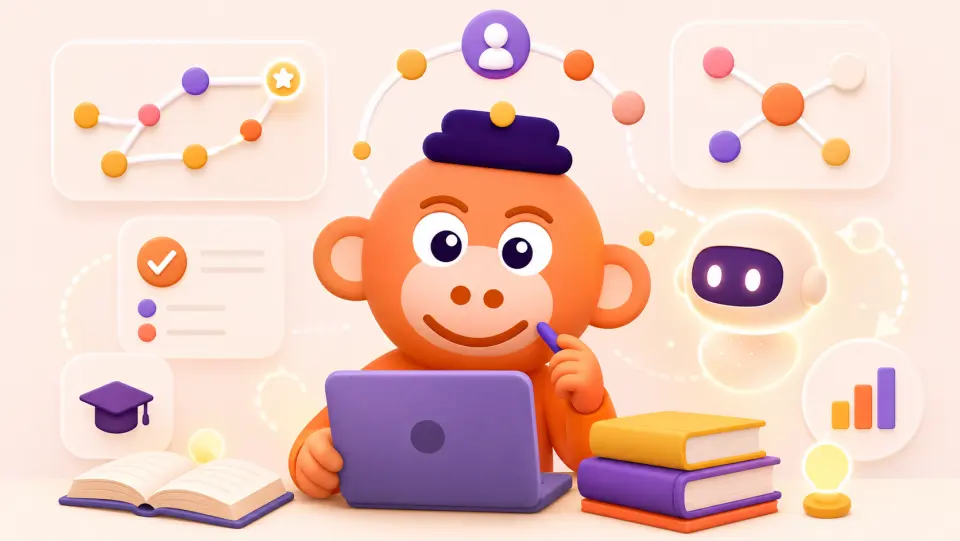
Effective AI tutoring has to do something harder. It has to support the whole learning process: choose the next step, explain at the right level, make the learner practice, respond to the answer, remember what happened, and bring important ideas back later.
If an AI tool cannot do those things, it may still be useful. It just should not be confused with tutoring.
It starts with the right level
A good tutor does not begin by dumping the full subject on the table. A good tutor asks where the learner is starting.
That matters more than people think. The same topic can need three different routes depending on the learner. A beginner studying Python needs variables, loops, functions, and tiny scripts. An intermediate learner may need data structures, testing, and working with APIs. Someone preparing for a job interview may need a different mix again.
AI tutoring becomes more effective when it respects level from the start. The explanation should use examples the learner can actually understand. The practice should be difficult enough to reveal thinking, but not so difficult that the learner collapses before the concept has a chance to land.
Bad tutoring makes people feel stupid for being in the wrong lesson. Good tutoring changes the lesson.
Structure beats a pile of answers
Answers are useful. A subject still needs order.
This is where many AI study experiences fall apart. The learner gets one helpful explanation, then another, then another, but the pieces never become a path. After a while the learner has plenty of information and very little direction.
Effective AI tutoring gives the learner a route through the material. It knows what section comes next and why. It connects the current idea to the previous one. It keeps the subject from turning into a drawer full of loose notes.
This is especially important for self-learners. In a class, the syllabus provides structure even when the lecture is imperfect. Alone, the learner has to supply structure, feedback, and accountability at the same time. That is a lot to ask.
An AI tutor should carry some of that load by turning the subject into a path the learner can follow and adjust.
Practice has to be built in
One of the easiest ways to make AI tutoring weak is to let the learner stay passive.
The app explains. The learner reads. The app explains again. The learner nods. It all feels productive, but nothing has tested whether the learner can use the idea without the explanation sitting in front of them.
Practice breaks that illusion. It asks the learner to solve, explain, compare, write, build, or recall. It creates evidence of understanding.
The form should match the subject. Math needs problems. Programming needs small tasks. History needs cause and effect. Languages need recall and use. Writing needs drafts and revision. The point is not to quiz for the sake of quizzing. The point is to make the learner's thinking visible enough for the tutor to help.
This is why explanation is not the same as tutoring. Tutoring starts to show up when the learner has to do something.
Feedback should be specific
Fast feedback is not automatically good feedback.
"Incorrect, try again" is fast. It is also thin. A full solution can be fast too, and sometimes it is even worse, because it removes the work before the learner has finished wrestling with it.
Effective AI tutoring gives feedback that is specific, small, and usable. It should identify the main gap in the answer. It should separate a wrong final answer from shaky reasoning, and a right final answer from lucky guessing. It should give the learner a next step that fits the mistake.
For example, if a student confuses correlation with causation, the feedback should not re-teach all of statistics. It should focus on that confusion. If a student writes a history answer with the right event but the wrong cause, the feedback should name the causal gap. If a programmer solves the problem but hardcodes the example, the feedback should point to the missing generality.
Good feedback makes the next attempt better.
The learner should still do the thinking
AI can produce polished answers very quickly. That is useful in many contexts, but tutoring has to be more careful.
If the tool gives away the whole answer too early, it creates relief instead of learning. The learner feels unstuck, but the thinking has moved from the learner to the machine.
Effective AI tutoring protects effort. It gives hints before solutions. It asks follow-up questions. It nudges the learner toward the missing connection. It can be generous without doing the work.
This is where Socratic feedback matters. A question like "Which part of your explanation proves that step?" can teach more than a finished paragraph. It keeps the learner active. It also makes confidence more honest, because the learner has to explain the idea in their own words.
Memory makes tutoring cumulative
Without memory, every AI tutoring session starts from scratch.
That is fine for a quick question. It is not enough for learning over weeks. A learner needs the second session to know something about the first one: what was studied, what was finished, what was missed, what feedback was given, and what should come back for review.
Memory turns isolated help into cumulative support. It lets the tutor notice patterns. Maybe the learner keeps skipping units in word problems. Maybe they understand a definition but cannot apply it. Maybe they pass a checkpoint once, then forget the idea two sections later.
Those patterns are where tutoring gets personal in a meaningful way. Not personalized as decoration. Personalized because the next step is based on what the learner actually did.
Review is part of effectiveness
An AI tutor should not treat learning as a straight line.
People forget. Concepts fade. A learner can understand something on Monday and lose it by Friday if it never comes back. Effective tutoring makes room for that reality instead of pretending completion is mastery.
Review should be shaped by the learner's history. Missed concepts should return sooner. Strong concepts can wait longer. Fragile ideas should show up in different forms so the learner is not just memorizing the original example.
This is why spaced review belongs inside a learning tool rather than outside it. The app already knows what happened. It should use that knowledge to keep important ideas alive.
Effective means boring in the right places
The best AI tutoring may not always look flashy. A lot of it is steady product work: clear paths, saved progress, careful answer checks, sensible review, and feedback that does not flatter the learner or overwhelm them.
That is a good thing. Learning rarely changes because of one magical explanation. It changes because the learner keeps returning to the right next step, with enough support to continue and enough friction to actually think.
That is what Benji is trying to build. Not a homework shortcut, and not another chat window with a friendlier label. A learning path, practice, feedback, memory, and review in one loop. If you want to see how that feels on a subject you care about, start a path in Benji.