How an AI Tutor App Works
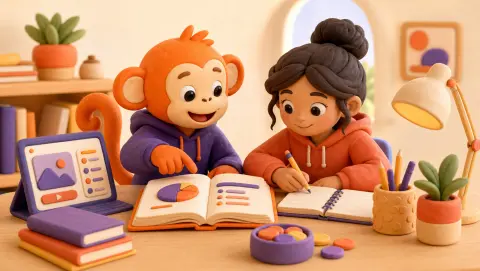
An AI tutor app sounds simple from the outside. You ask a question, the app answers, and learning happens.
That is the shallow version. It may be useful for a quick explanation, but it is not really tutoring. Tutoring is a loop. A learner starts somewhere, studies a small piece, tries to use it, gets feedback, and then the next step changes based on what happened.
The important part is not that AI can explain a concept. The important part is whether the app can keep a learner inside that loop long enough for understanding to build.
The first job is turning a topic into a path
Most learners do not arrive with a perfect syllabus in their head. They arrive with something broad: "I want to learn Python," "I need help with linear algebra," "I should understand AP Biology," or "I want to study music theory."
An AI tutor app has to turn that broad intention into a sequence. Not a random pile of lessons, and not a list copied from the first search result. A real path should have sections in a sensible order, written for the learner's starting level, with enough scope that each section can actually be finished.
This is where tutoring starts. If the first step is too easy, the learner gets bored. If it is too advanced, the learner blames themselves for a sequencing problem. Good tutoring begins by putting the next idea within reach.
That is why an AI study buddy is different from a loose chat. A chat can answer almost anything. A tutor has to decide what comes next.
The lesson needs context
Once the path exists, each section needs to open into a lesson that knows where it sits.
That sounds obvious, but it is easy to miss. An explanation of recursion should look different for a beginner who just learned functions than for a working developer brushing up before an interview. A lesson on eigenvectors should connect back to transformations and matrix multiplication. A history lesson should know which period the learner has already covered.
Context keeps explanations from floating in space. It lets the app say, "This builds on the idea you just learned," or "This is the part that will matter in the next section."
The best AI tutor apps use the path as the frame for every lesson. They do not treat each prompt as a brand-new universe. They know the section, the goal, and the learner's level before they start teaching.
Practice is where the app learns about the learner
Reading a clear explanation can feel like progress. Sometimes it is. But a tutor cannot know what landed until the learner tries to do something with it.
That is why practice has to be part of the app, not an optional extra. A learner should answer questions, solve problems, explain reasoning, compare examples, or apply the idea to a small task. The exact format depends on the subject, but the purpose is always the same: make understanding visible.
A math section might ask the learner to solve a new problem. A programming section might ask for a small function. A writing section might ask for a claim and supporting evidence. A history section might ask the learner to explain cause and effect in their own words.
The answer gives the app data. Not the creepy kind of data. The useful kind: this concept is solid, this answer is close, this reasoning is thin, this prerequisite is missing.
Feedback should change what happens next
The feedback step is where an AI tutor app either becomes useful or turns into a nicer answer key.
A weak app says "correct" or "incorrect." A slightly better one gives a full explanation. A real tutoring app reads the answer, names the specific gap, and chooses a useful next move.
Sometimes the next move is to continue. Sometimes it is a hint. Sometimes it is a simpler example. Sometimes it is a retry that focuses on the exact point the learner missed. If the student used the right word in the wrong way, the feedback should catch that. If they got the answer right but skipped the reasoning, the app should ask for the missing step.
This is the same idea behind AI feedback on student answers. Good feedback is not just fast. It is specific enough to act on.
The app needs memory
Memory is the line between a clever session and a real learning system.
If an app forgets everything after one chat, the learner has to rebuild context every time. What did I already study? Which lesson did I finish? What did I get wrong last time? What should I review today?
That mental reset is expensive. It is also one of the reasons people drift away from self-study. The hard part is not always motivation. Sometimes it is the small friction of restarting from nothing.
An AI tutor app should remember the path, the finished sections, the answers, the feedback, and the weak spots. The second session should be better because the first session happened. That is the whole point of saved progress.
Without memory, the app can still explain. With memory, it can tutor.
Review keeps old learning alive
Learning is not a single pass through a curriculum. Missed ideas need to come back, and even understood ideas fade if they are never used again.
That is where review enters the loop. A good AI tutor app should bring older concepts back before they disappear, especially concepts the learner struggled with. It should ask a small question from a previous section, connect an old idea to a new one, or build a practice step around a mistake that keeps recurring.
This matters because the app should not treat "finished" as the same thing as "mastered." A section can be complete on the screen while the concept is still fragile in the learner's head. Spaced review helps close that gap by turning old material into future practice.
The basic loop
Put it all together and an AI tutor app is not mysterious. The loop is simple:
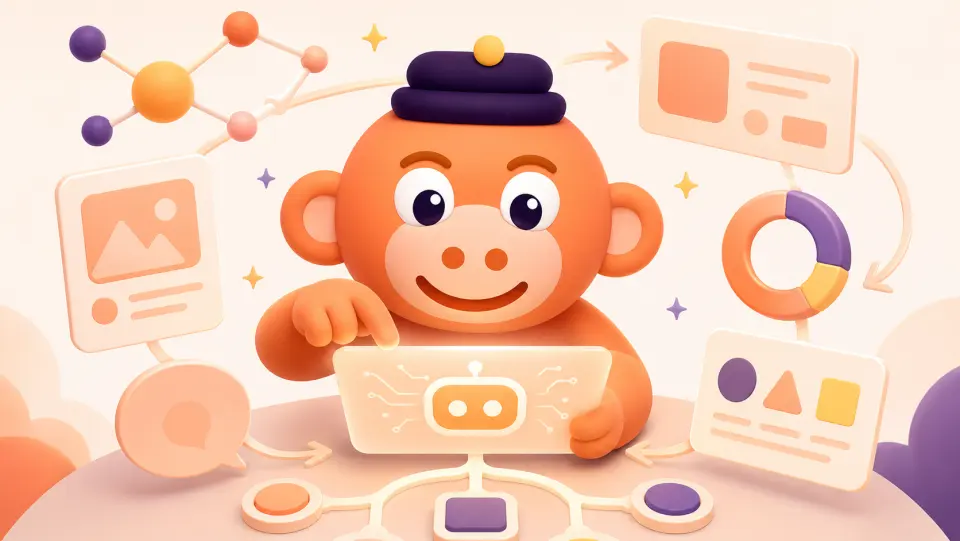
Plan the path. Teach one section in context. Ask the learner to do something. Check the answer. Give targeted feedback. Adapt the next step. Save what happened. Bring weak spots back for review.
Every product decision should serve that loop. If a feature makes the next learning action clearer, it probably belongs. If it only makes the app feel busy, it probably does not.
That is the version of AI tutoring Benji is built around. You start with a topic, get an editable path, open a lesson, answer questions, get feedback, and return later to progress that still exists. If there is a subject you have been carrying around as a vague intention, turn it into a path and run the first loop.